Learning from Iraq and Afghanistan

Views from Samaria

Let us be honest – the Americans blew it in Afghanistan and then they blew it in Iraq. The Bush administration was so confident Iraqis and Afghanis were a bunch of marauding barbarians; they believed it would take a few airstrikes to take both regimes down. It took thousands of dead Iraqis and American soldiers to make them re-think their strategy. For Bush, however, it was too late.

But the re-thinking did work. The job is undoubtedly hard, but the Americans still make an effort so the locals would discern between the terrorists (the bad guys, killing people for intimidation and profit) and the Americans (the good guys, rebuilding schools, hospitals and providing security). While tough, the US troops managed to change the Rules of Engagement, keep the finger off the trigger and even persuade some locals – many locals, in case of Iraq – that it’s better to cooperate with Uncle Sam. Yes, there is much to, but the GI’s have shown us some spectacular progress.
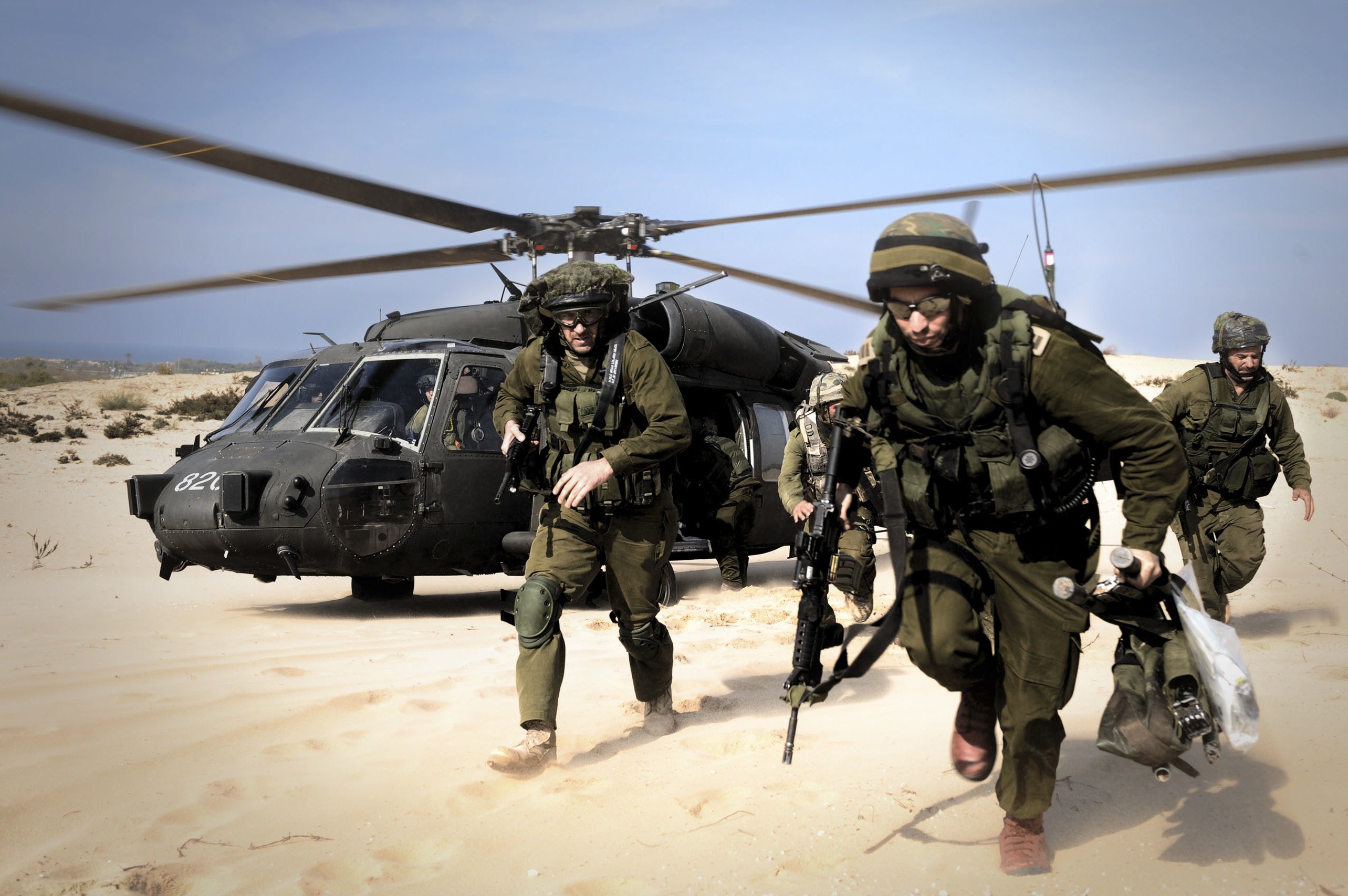
IDF Unit 669 - SAR (Search and Rescue)

The Israelis were always different. We taught the Americans many tricks they had to know to blow the terrorists into the skies. We shared our knowledge on counter-terrorism and counter-insurgency, making us invaluable allies. Our mailed-fist tactic won us few wars; our Special Operations units are some of the best. We are a great military power.

What we did not learn ourselves, though, is how to combine the harsh armed doctrine with winning the hearts of the civilian population. For years now, the IDF acted well against armed Palestinian activists, arresting or killing hundreds, and thwarting suicide bombings in our cities. We did not, however, understand that among the terrorists live people. Many of them probably hate us, and often we should thank outright, Fatah-fed propaganda for that. And yet, we do little to counter the lies, and instead of winning over the folks, we win the terrorists – while trampling the people.

It is our turn, therefore, to win over hearts and minds of the Palestinian population. Not to control them and not to rule over them – but to have real peace. It is going to be hard now, and would require years – if not decades – of effort. Yet, it is this endeavor we should take on, and only it would save us the trouble of wars.

First we have to understand how pressing the issue is. Palestinian PM Salam Fayyad does right now what we should have done for years now – he travels the West Bank, he helps people and he pushes through new projects to advance Palestinian development. While unable to garner support from everyone – the naysayers will always live – he made some remarkable progress in the past year. The news will only get worse for us, as he portrays himself as the savior of the Palestinian people, while the Israelis would still be the enemy. With Fayyad’s assertive strides towards Palestinian independence, we are left side by side with another hostile Arab state, war with which is just a matter of time.

The contrary is our goal: while we support the creation of Palestinian state, it is our aim to change the Palestinian mindset from opposing everything Israeli to cooperation. The IDF – being the one in constant contact with the Palestinians – would have to take it upon its shoulders. Just like the Americans, the IDF would have to take the mission of rebuilding roads, protecting the children on their way to school and making sure that hospital gets all the supplies it needs.

Let’s daydream a bit: a traffic accident in a Palestinian village. People trapped in their cars; unconscious children, who need medical care right away. The residents of the village gather around, but are unable to help – they do not have the right tools and they could cause more damage than good. Then, there is a loud roar from above and an IDF helicopters, carrying members of the 669 Rescue Unit arrives at the scene, with soldiers landing on their feet besides the vehicle and taking straight to work. Within seconds, five soldiers surround the car, use heavy tools to cut the vehicle apart and load up the civilians into the helicopter. The Black Hawk then flies straight to Ramallah, where it lands on hospital’s roof, passing the patients into the hands of Palestinian doctors.

Is this an impossible dream? It now is, and will stay this way, unless the storm troopers and the generals learn to switch the mindset. Peace is possible – but not when you kill off people you’re supposed to have peace with. The IDF faced a tough task of counter-terrorism in the past decade; the circumstances are changing, though. The West Bank is not the terror safe house like it used to be. The Palestinian economy grows and people enjoy more freedom. The removal of some roadblocks did not light up the Bank on fire, as skeptics predicted. And in two years Salam Fayyad plans to establish Palestine.

Whether he would do it or not is not the issue. It will happen – in two years or in two hundred years. But it is up to us to decide who will live beside us – a hostile, murderous nation, or a fairly prosperous, mostly neutral one. They will not be our friends. We should not make them our enemies.

Egypt: Lebanese are panicking over war with Israel

Views from Samaria

Despite fiery speeches by HizbAllah chairman Hassan Nasrallah, Egypt’s FM Ahmed Aboul Gheit said Lebanon is engulfed in a “complete panic”, due to a perceived possibility of a war with Israel:

The panic was spurred by the recent reports that Syria has delivered Scud missiles to Hezbollah. But senior diplomats have told Haaretz that Western intelligence agencies, including those of the United States, have been unable to independently confirm that such missiles have been sent to the Shi’ite group. In recent months, Israel has used diplomatic channels via the United States and European Union to relay warnings that Syria was transferring advanced weapons systems to Hezbollah. (Haaretz)

HizbAllah's rockets pointing at Israel
HizbAllah's rockets pointing at Israel. Waiting for another round?

CERTAINLY, THE LEBANESE’S sense of emergency is exploited by Nasrallah and his minions for own political purposes. While Israel did not declare any intention to attack, and officials’ speeches were far less aggressive than those of Nasrallah, the latter uses Israel’s warning as pretext to arm his group with as advanced arms as possible. Words of praise for his fighters and their skill in fighting the IDF seem to do little to calm the ordinary people of Lebanon. Anyone but most ideology-driven activists understand that in another conflict between Israel and Lebanon the former – rather than latter – will come out victorious.

While the Israelis would certainly suffer casualties, those would be far lower than of their Lebanese adversaries, due to better training and equipment of the armed forces, and thanks to advanced protective civilian infrastructure built by the Defense Ministry and the IDF. In 2006, despite constant shelling by Nasrallah’s men, less than 60 Israeli civilians died (including several Israeli Palestinians) thanks to shelters built specifically for such an occurrence. That is in stark contrast to hundreds of Lebanese citizens, trapped by HizbAllah thugs in their homes and villages, unable to escape, or having no fortified shelters to occupy. The people of Lebanon understand: provoking another conflict with the IDF is insanity. Sadly, it is not their call. In a surprisingly good article, Lebanese Daily Star offers an analysis of the events, from Lebanon’s perspective. While the authors believe Israel would attack and only waits for a suiting opportunity, the analysis is still quite sound:

In another view, if Syria has indeed smuggled Scuds to Hizbullah, it appears Damascus decided to raise the pressure in the region to draw US attention to the necessity of including Syria in the possible resumption of Palestinian-Israeli peace talks, Khashan said. But the ploy boomeranged when the US upped the stakes by calling into question all of Hizbullah’s rocket stockpile, said the AUB lecturer. “The Syrians want to create a controlled crisis because the US has not been forthcoming on peace between Syria and Israel,” Khashan said. “Their plans have backfired. The issue now has gone out of control. The US has now brought up the entire Hizbullah missile arsenal.”

Worsening the blowback, Syria might well find itself imperiled should a conflict erupt – if Hizbullah fires a Scud on Israel, blame would fall on Damascus, so Israel would be able to target Syria as well, Khashan added. … But if those peace talks collapse, Israel will move to eliminate the Scuds from near its northern border, Khashan said. He said he disagreed with the notion that a deterrent equation existed between Israel and Hizbullah; Israel was avoiding war with Hizbullah because the Israeli state was happy with the status quo, he added. “Israel does not want a confrontation with Lebanon,” Khashan said. “Israel has achieved its objectives: They have the water, they have the security and they have a demilitarized border.” (Daily Star)

Since the Six Days War, the IAF are trained to fly up to 8 sorties a day - or more. IAF's F-16 jet.The major upside of this article is that, unlike most other Arab media, it analyses the situation based on dry facts, which is quite uncommon in the Middle Eastern press, which usually mixes facts with ideology. While this author does not believe Israel would be the one to fire the first shot, it is certain the Jewish state would respond swiftly – and thus, not necessarily correctly – to an armed attack coming from Nasrallah’s men. Still, despite the militant rhetoric from both states, it is Lebanese civilians who would suffer most. They will not see the Lebanon Armed Forces protecting them, as some evidence suggests the LAF either turns a blind eye towards HizbAllah’s armament or actively cooperates with Nasrallah’s men.

Even less the Lebanese can count on the UNIFIL, which has no mandate to use arms and would likely disband itself the moment the fighting would begin. In any case, the best Lebanon’s civilians can count on is for the brave UN soldiers to lock themselves up in their bases and bunkers and wait the fight out. Ironically, while Nasrallah proclaims his intentions to protect the people of Lebanon, he is now their worst enemy. There is no doubt anyone from Bint Jbail to Beirut understand the threat of Israel and would like to see this rock off their shoulders. However, many also understand – and the Daily Star article attests to that – that Syria and it’s “Nasrallah subdivision” is the only one who by their own actions could bring the wrath of the IAF on them.

Blog at WordPress.com.

Up ↑